




Despite improvements in care, the prevalence of dialysis remains high across the globe, with a median of 397 people per million globally1

Factors impacting the prevalence of dialysis:2

Improved overall survival

Prevalence of risk factors, such as obesity and diabetes

An aging population

Access to treatment
The proportion of patients with CVD increases as kidney function worsens3
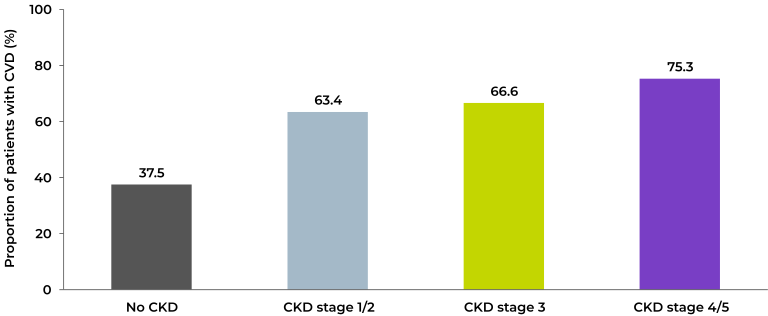
Figure shows the adjusted prevalence of common cardiovascular diseases in Medicare beneficiaries aged ≥66 years, by CKD status and stage in the
US Renal Data System in 2018. CKD, chronic kidney disease.
Figure adapted from: Figure 4.2 from the National Institute of Diabetes and Digestive and Kidney Diseases (NIDDK). United States Renal Data System annual data report 2020 chronic kidney disease. Chapter 4: Cardiovascular Disease in Patients With CKD. Available at https://usrds-adr.niddk.nih.gov /2020/chronic-kidney-disease/4-cardiovascular-disease-in-patients-with-ckd. Accessed March 2026.
More than two thirds of adults on maintenance dialysis have comorbid cardiovascular disease:4
>1 in 3
have coronary artery disease4
>1 in 10
have had a stroke4
>1 in 10
have had a myocardial infarction4
>1 in 4
hospitalizations for patients on dialysis are due to cardiovascular causes5
CVD is the leading cause of death in patients on dialysis1

of countries for hemodialysis1

of countries for peritoneal dialysis1
Chronic, low-grade inflammation is a well-established factor in the onset of cardiovascular complications in patients on dialysis6,7
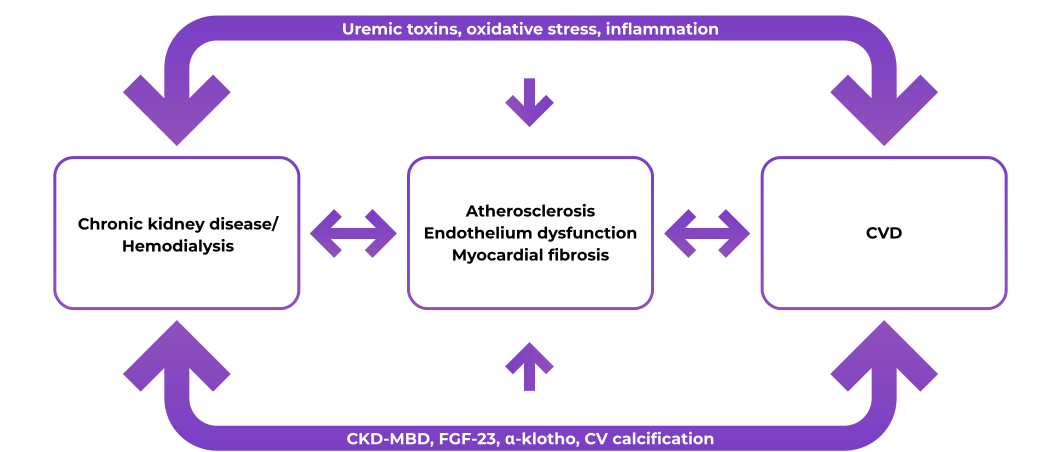
CKD-MBD, chronic kidney disease-mineral bone disorder; CV, cardiovascular; FGF-23, fibroblast growth factor 23.
Figure adapted from: Cozzolino M, et al. Nephrol Dial Transplant 2018;33:iii28–iii34.

High-sensitivity C-reactive protein (hs-CRP) is a clinically valid biomarker of chronic inflammation and predictor of cardiovascular risk8
hs-CRP levels ≥2 mg/L are considered moderate-to-high risk8

American College of Cardiology
consensus recommendation:8
Among individuals with known CVD both treated and not treated with statins, hs-CRP is at least as powerful a predictor of recurrent vascular events as that of low-density lipoprotein cholesterol (LDL-C), demonstrating the importance of ‘residual inflammatory risk’ in contemporary practice


References:

- Bello AK, et al. ISN–Global kidney health atlas: A report by the International Society of Nephrology. Available at: https://www.theisn.org/wp-content/uploads/media/ISN%20Atlas_2023%20Digital_REV_2023_10_03.pdf. Accessed March 2026.
- Thurlow JS, et al. Am J Nephrol 2021;52:98–107.
- National Institute of Diabetes and Digestive and Kidney Diseases (NIDDK). United States Renal Data System annual data report 2020 chronic kidney disease. Chapter 4: Cardiovascular Disease in Patients With CKD. Available at: https://usrds-adr.niddk.nih.gov/2020/chronic-kidney-disease/4-cardiovascular-disease-in-patients-with-ckd. Accessed March 2026.
- National Institute of Diabetes and Digestive and Kidney Diseases (NIDDK). United States Renal Data System annual data report 2023 end stage renal disease: Chapter 1. Available at: https://usrds-adr.niddk.nih.gov/2023/end-stage-renal-disease/1-incidence-prevalence-patient-characteristics-and-treatment-modalities. Accessed March 2026.
- National Institute of Diabetes and Digestive and Kidney Diseases (NIDDK). United States Renal Data System annual data report 2025 end stage renal disease: Chapter 5. Available at: https://usrds-adr.niddk.nih.gov/2025/end-stage-renal-disease/5-hospitalization. Accessed March 2026.
- Wang Y & Gao L. Front Pharmacol 2022;13:800950.
- Cozzolino M, et al. Nephrol Dial Transplant 2018;33:iii28–iii34.
- Mensah GA, et al. J Am Coll Cardiol 2025:S0735-1097(25)07555-2.